








Building Stronger Communities: Insights from Local Economic Development Efforts in Pico Union
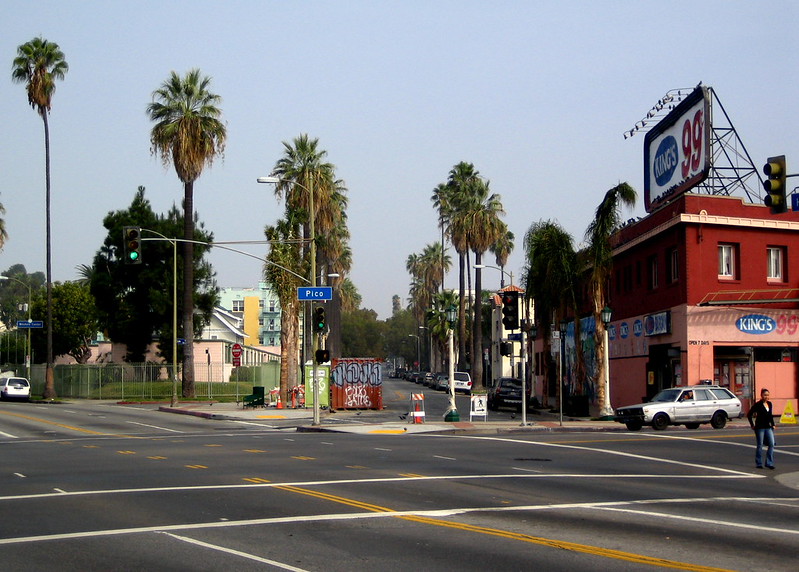
Featured Photo Credit: “Pico & Hoover” by waltarrrrr, CC BY-NC-ND 2.0
Executive Summary
Times of crisis often expose and deepen longstanding vulnerabilities in undercapitalized communities, leaving residents and small businesses without access to critical resources. In response to the COVID-19 pandemic and overlapping crises of housing instability, immigration enforcement, and environmental stress, community-based organizations (CBOs) across the United States mobilized rapidly to meet urgent needs while advancing long-term strategies for community resilience. This case study examines how these dynamics played out in Pico-Union, a densely populated, majority-Latino neighborhood in central Los Angeles, and how community-rooted organizations responded through culturally grounded, economic development strategies.
Pico-Union is a historic immigrant gateway neighborhood, often described as an “urban Ellis Island” for Latino migrants. Today, it is home to predominantly Salvadoran and Guatemalan families, alongside Mexican and other immigrant communities. Despite its cultural vibrancy and strong informal economy, Pico-Union has long experienced chronic disinvestment, extreme housing overcrowding, high poverty rates, and limited access to green space and public infrastructure. These structural conditions intensified during the COVID-19 pandemic, when residents faced elevated health risks, income loss, and exclusion from federal relief programs tied to formal employment or immigration status.
To examine neighborhood conditions and community responses in Pico-Union, this study combines quantitative and spatial data analysis with historical research and in-depth interviews with leaders from three Latino-serving organizations: Inclusive Action for the City, Central City Neighborhood Partners (CCNP), and the Central American Resource Center (CARECEN). While limited in number, these interviews provide critical practitioner insight into how trusted institutions navigated crisis response, advocacy, and long-term economic strategy in a highly constrained policy environment.
Using quantitative data, we find:
- Severe housing precarity and extreme overcrowding: Nine out of 10 households are renters (90%), far exceeding city (64%) and county (54%) rates. In 2023, one third of households (33%) were overcrowded—nearly triple the share in Los Angeles City (12%) and County (11%) overall.
- Deep economic vulnerability in an immigrant-majority community: Pico-Union is a predominantly immigrant neighborhood, with over half of residents born outside the U.S. (54%) and more than one third identifying as noncitizens (37%), more than double the city and county shares. Median household income is just $44,500, only 64% of the city median and 54% of the county median.
- Disproportionate COVID-19 mortality and exposure: Cumulative COVID-19 mortality rates in Pico-Union reached 886 deaths per 100,000 residents, more than twice the city and county rates, and placed the neighborhood among the top 10 in Los Angeles for COVID-related deaths.
Historical analysis and community expert interviews further reveal that:
- Community-led crisis response filled gaps left by formal systems: Latino-led CBOs in Pico-Union rapidly mobilized mutual aid networks, direct cash assistance, food distribution, legal services, and culturally responsive health outreach to meet urgent needs during COVID-19, often serving undocumented and mixed-status families excluded from public relief.
- Trust and cultural fluency enabled effective intervention: Longstanding relationships with residents allowed organizations to move quickly during the pandemic and other crises, countering misinformation, and delivering aid in residents’ primary languages, particularly during periods of heightened fear related to immigration enforcement and public health uncertainty.
- Building community power is central to long-term economic resilience: Beyond crisis response, Pico-Union organizations invest in community power-building through advocacy, policy engagement, and leadership development. By organizing residents, defending immigrant rights, and challenging top-down development models, local leaders are working to ensure that future investments strengthen neighborhood stability, protect residents from displacement, and reflect community-defined priorities.
Traditional economic development approaches have often overlooked Pico-Union’s residents, treating density and informality as problems to be managed rather than realities shaped by structural exclusion. In contrast, Latino-led organizations in Pico-Union are advancing an alternative vision: one that prioritizes community power, protects residents from displacement, and recognizes informal and cultural economies as foundational to neighborhood resilience.
For Pico-Union’s community leaders, economic development is inseparable from care, advocacy, and survival. Their work demonstrates that durable recovery and long-term prosperity require investing in trusted community institutions as partners, not intermediaries. The takeaway for policymakers, funders, and researchers is clear: Sustainable economic inclusion in neighborhoods like Pico-Union depends on centering community-led strategies that honor cultural knowledge, address structural inequities, and support residents’ right to remain and thrive in the communities they have built.
Introduction
Times of crisis often expose and deepen longstanding vulnerabilities in under-capitalized communities. During the COVID-19 pandemic, historically disinvested communities experienced disproportionate levels of business closures,1 unemployment,2 and housing instability.3 Pico-Union, a majority-Latino neighborhood in Los Angeles, California, exemplified these patterns, having long faced poverty, disinvestment, and environmental challenges.
In response to the crisis, grassroots organizations in Pico-Union, greater Los Angeles, and across the U.S. quickly mobilized to fill governance and service delivery gaps and meet the critical needs of vulnerable members, particularly those excluded from or unable to access government relief programs such as the Paycheck Protection Program (PPP).4 From launching mutual aid networks to provide food and medicine to creating emergency relief funds for small businesses and cultural bearers, these organizations demonstrated ingenuity and commitment to community well-being. However, few studies have sought to tell the stories of the community-based efforts that sustain communities through crises. This brief combines quantitative data and cultural narratives to highlight Latino-led, community-driven responses that address both crisis and long-term empowerment.
About this Case Study
This case study is part of a series documenting Latino-led Economic Development (LLED) efforts. We define LLED as community-rooted strategies that foster economic resilience and justice through advocacy, education, access to capital, and cultural
In Pico-Union, a heavily Central American Los Angeles neighborhood, LLED strategies emerged as vital responses to the compounding challenges of poverty and housing precarity, service provision barriers, and the COVID-19 pandemic. This case study examines how community-led efforts in Pico-Union delivered immediate relief that filled the gaps for residents most urgently impacted by these challenges, giving hope and opportunity, especially to immigrant Latino populations.
To study Pico-Union and Los Angeles’ community-led interventions, we utilized quantitative and spatial data analysis, supplemented by historical analyses and in-depth interviews of three established nonprofit leaders in Los Angeles. We draw on interviews with Rudy Espinoza, CEO of Inclusive Action for the City;5 Diana Alfaro, MPH, associate executive director at Central City Neighborhood Partners (CCNP);6 and Martha Arevalo, executive director of the Central American Resource Center (CARECEN).7
These practitioners offer personal perspectives and deep institutional insight, grounded in their leadership of regionally impactful organizations supporting economic resilience and community well-being across systems. Although limited in number, these interviews offer valuable practitioner perspectives that help contextualize our findings, particularly when considered alongside demographic and environmental data (see Appendix for additional details on methodology).
These interviews were conducted during another period of deep crisis for Los Angeles communities. Fires in January 2025 destroyed thousands of structures and resulted in the loss of dozens of lives in Altadena, Pasadena, Sierra Madre, Palisades, Malibu, and other areas of the county. Recent federal politics have also resulted in heavy increases in violent immigration raids, which have created fear across the undocumented and documented immigrant communities alike. These crises have further exacerbated the financial hardship and limited opportunities already faced by many Angelenos. At the same time, partners also spoke to the resilience of communities fighting for their survival, often better equipped due to the lessons they learned from past crises like the COVID-19 pandemic.
Traditional economic development often excludes community voices and cultural knowledge, leaving neighborhoods like Pico Union trapped between chronic disinvestment and emerging pressures that threaten long-time residents’ ability to remain in place. Local Latino-led CBOs are challenging this cycle by ensuring communities have the resources and capabilities to be active agents in building the communities they want to see. These CBOs also push local funders and government to put the needs of the most vulnerable first in their development efforts. They imagine a future for the neighborhood where all residents can thrive and feel the value of their efforts, enriching their own communities.
A History of Pico-Union: An Urban Ellis Island for Central American and Latino Immigrants
Named for its location at the intersection of Pico Boulevard and Union Avenue, the Pico-Union neighborhood of Los Angeles first developed in the 1910s following the expansion of streetcar lines along Pico and Washington Boulevards.8 Then known as the Westlake District, it primarily housed downtown office workers, who were predominantly white and middle- to upper-middle-class.9 However, even from its early days, Pico-Union received hundreds of immigrants to the United States, including those from many European communities.10
As the pace of suburbanization accelerated in Los Angeles in the 1950s and 1960s, Pico-Union experienced “white flight,” or the departure of wealthy, white residents to nearby suburbs and edge cities.11 The loss of these residents and businesses catering to them led to lower demand for commercial space, higher vacancy rates, and lower property values for much of the neighborhood in the 1960s and 1970s. As a result, housing conditions and public infrastructure deteriorated.12
In the late 1970s and 1980s, Pico-Union experienced new waves of immigration, as many working-class Mexican immigrants moved in, followed by large populations of Salvadoran and Guatemalan refugees fleeing civil war, unrest, persecution, and economic hardships.13 Pico-Union offered new U.S. arrivals lower housing costs and an expanding familiar ethnic network. By the early 1980s, it was the center of Central American settlement.14 However, “slow growth” defined 1970s Los Angeles (meaning insufficient new construction to keep up with housing demand), and many immigrants doubled up into small apartments and spaces, resulting in Pico-Union becoming one of Los Angeles’s densest neighborhoods.15
Despite challenging local conditions and public disinvestment, immigrants have revitalized and reshaped Pico-Union. Martha Arevalo, executive director at CARECEN, describes the entrepreneurial spirit that immigrants bring to the neighborhood:
“Pico-Union represents the immigrant spirit. People make something out of nothing and make survival look beautiful and amazing. It’s an important part of the city, but it is plagued with many of the challenges that the Los Angeles region is facing…This is a community that’s constantly moving and finding new opportunities…Newcomers have this incredible spirit of survival and hard work.”
This influx of Central American migrants continues today and has led to the formation of new cultural institutions serving the Central American community. Many immigrants opened restaurants, markets, express courier services, and street vending businesses that catered to the specific needs and tastes of Central Americans.16
Neighborhood Conditions in Pico-Union Today
A. Pico-Union’s Location and Cultural Identity
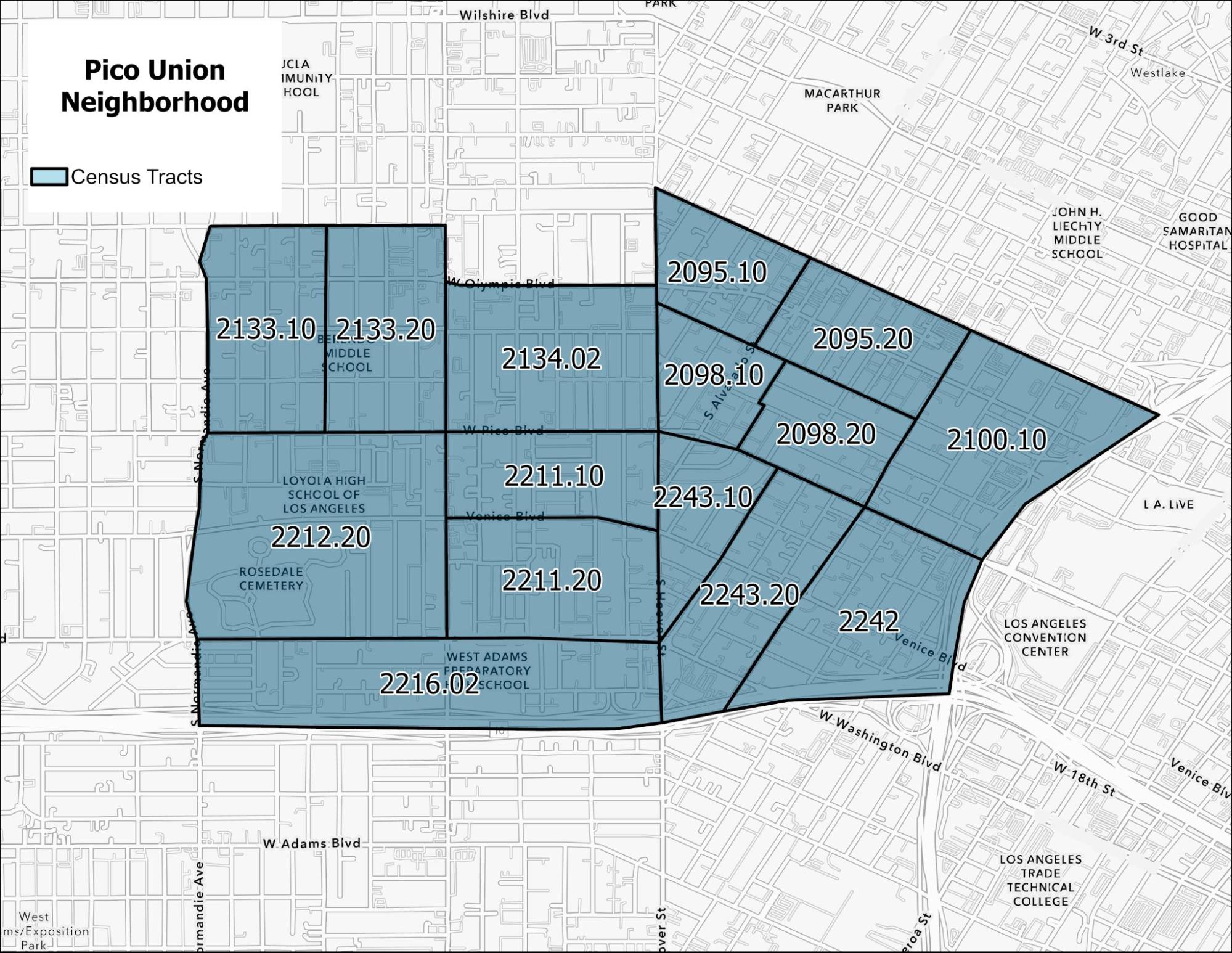
Today, Pico-Union is home to many residents originally from Central America, Mexico, and Asia, and is characterized by its street vending and strong informal economy.17 The neighborhood lies just east of Koreatown and spans 15 census tracts,18 and is bordered by the 110 Freeway to the east and the 10 Freeway to the south, as shown in Map 1. The blue shaded polygons indicate the census tracts used to provide demographic and socioeconomic data for Pico-Union.
Map 1. Pico-Union Neighborhood Boundaries and Census Tracts Used in Analysis
Source: U.S. Census Bureau, 2020 Cartographic Boundary Shapefile; OpenStreetMap.
Pico-Union is a predominantly Latino neighborhood, with three out of four residents identifying as Latino (78%; Table 1). This is well above the shares in Los Angeles City (47%) and County (48%) as a whole. Pico-Union also boasts an Asian population share roughly in line with city and county levels (13% compared to 12% and 15% respectively), most of whom are of Korean descent.19
Table 1. Pico-Union Racial and Ethnic Composition, 2023
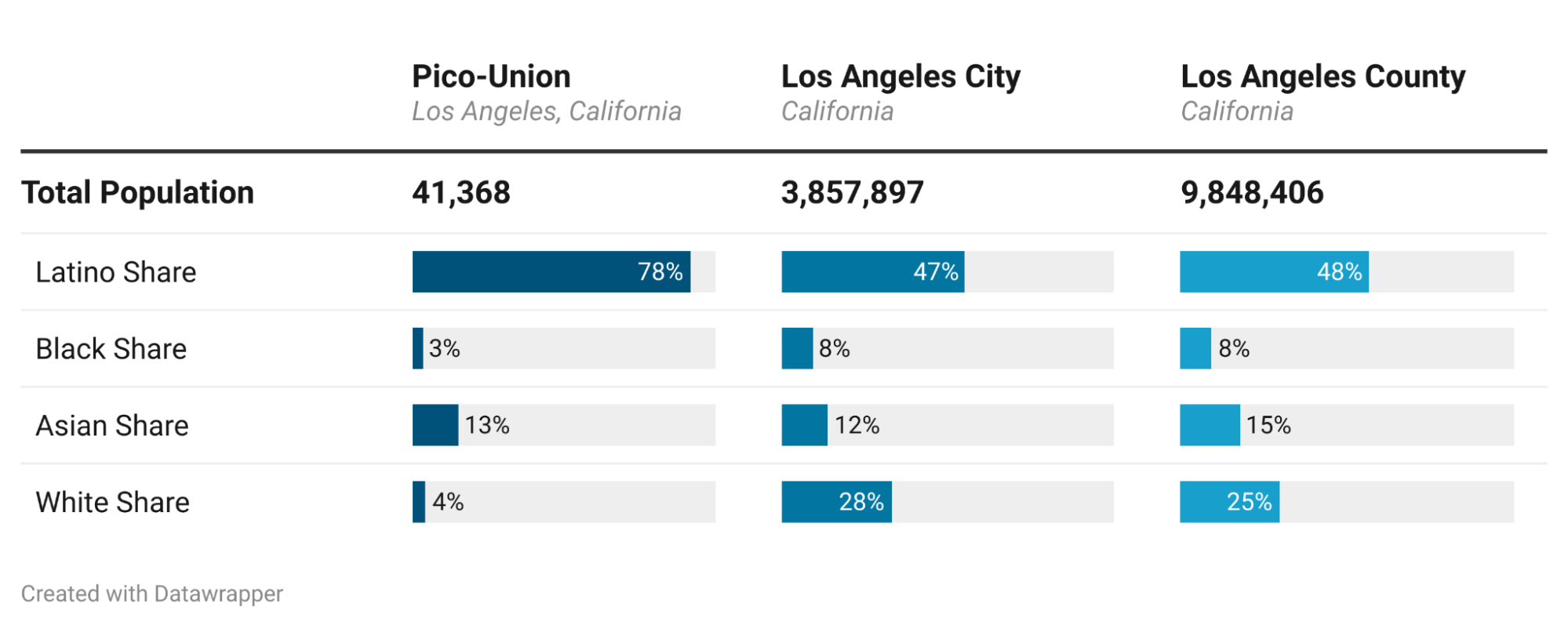
Note: Latinos can be of any race. All other groups reflect the non-Latino/non-Hispanic population.
Source: LPPI analysis of 2023 5-Year American Community Survey Table B03002, available online.
Pico-Union’s Latino population is almost evenly split between people of Mexican (50%) and Central American descent (45%; Table 2). While approximately three-quarters of Latinos in Los Angeles County are of Mexican origin (74%), only half of Latinos in Pico-Union fall into this group. In contrast, the combined Central American share (45%) is much higher than that of Los Angeles City (27%) and County (18%). The Central American population in Pico-Union includes substantial Salvadoran (22%), Guatemalan (16%), Honduran (3%), and Nicaraguan populations (3%).
Pico-Union is also home to prominent indigenous groups, including Zapotecs from Oaxaca, Mexico,20 Kanjobal from the Guatemalan highlands,21 and K’iche from Guatemala.22 One recent analysis highlighted that Pico-Union—and its neighbors Westlake and Koreatown—are home to some of the largest concentrations of indigenous immigrants in Los Angeles County.23
Table 2. Pico-Union Latino Population by Descent Group, 2023
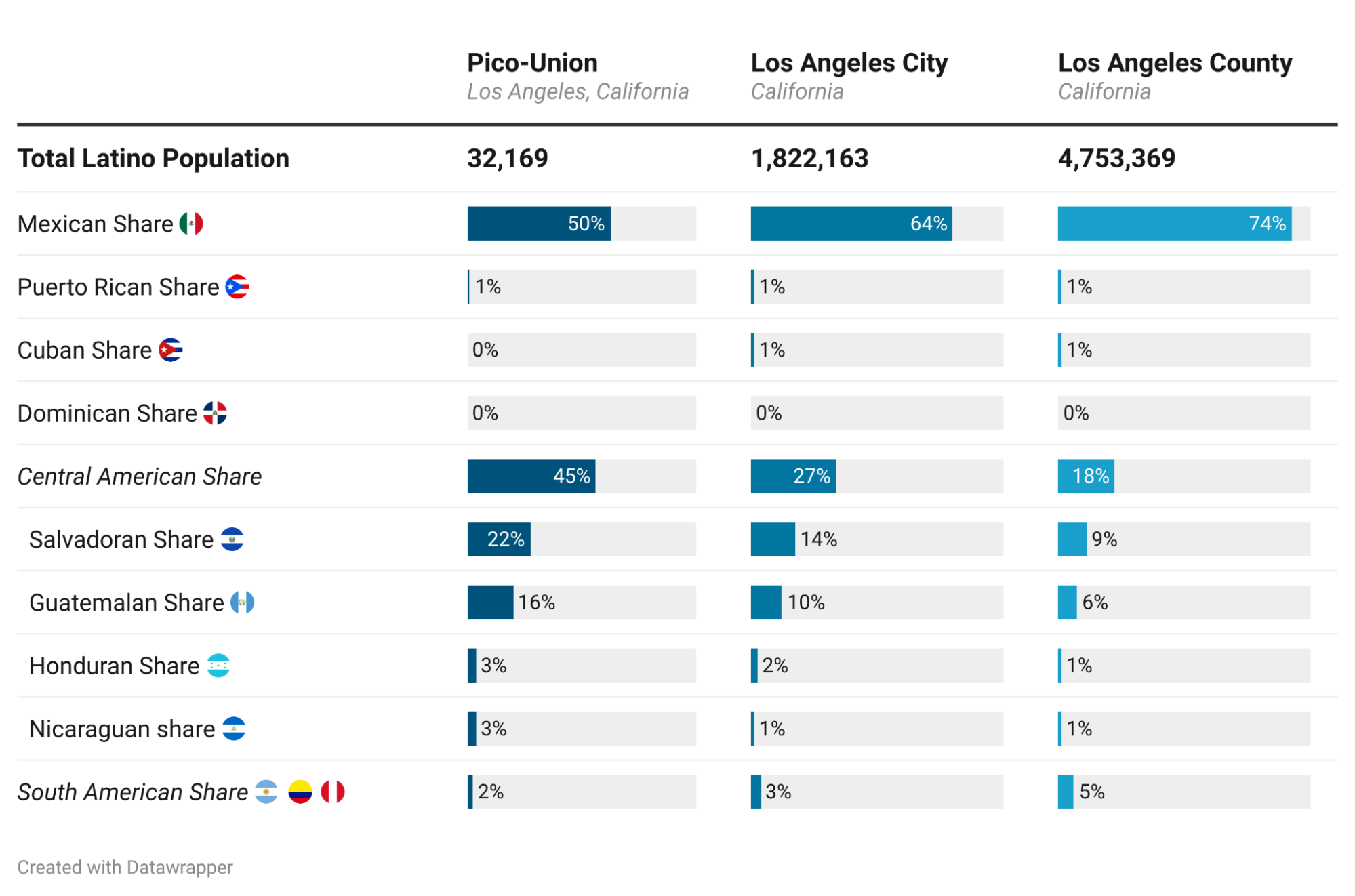
Note: Latinos can be of any race.
Source: LPPI analysis of 2023 5-Year American Community Survey Table B03001, available online.
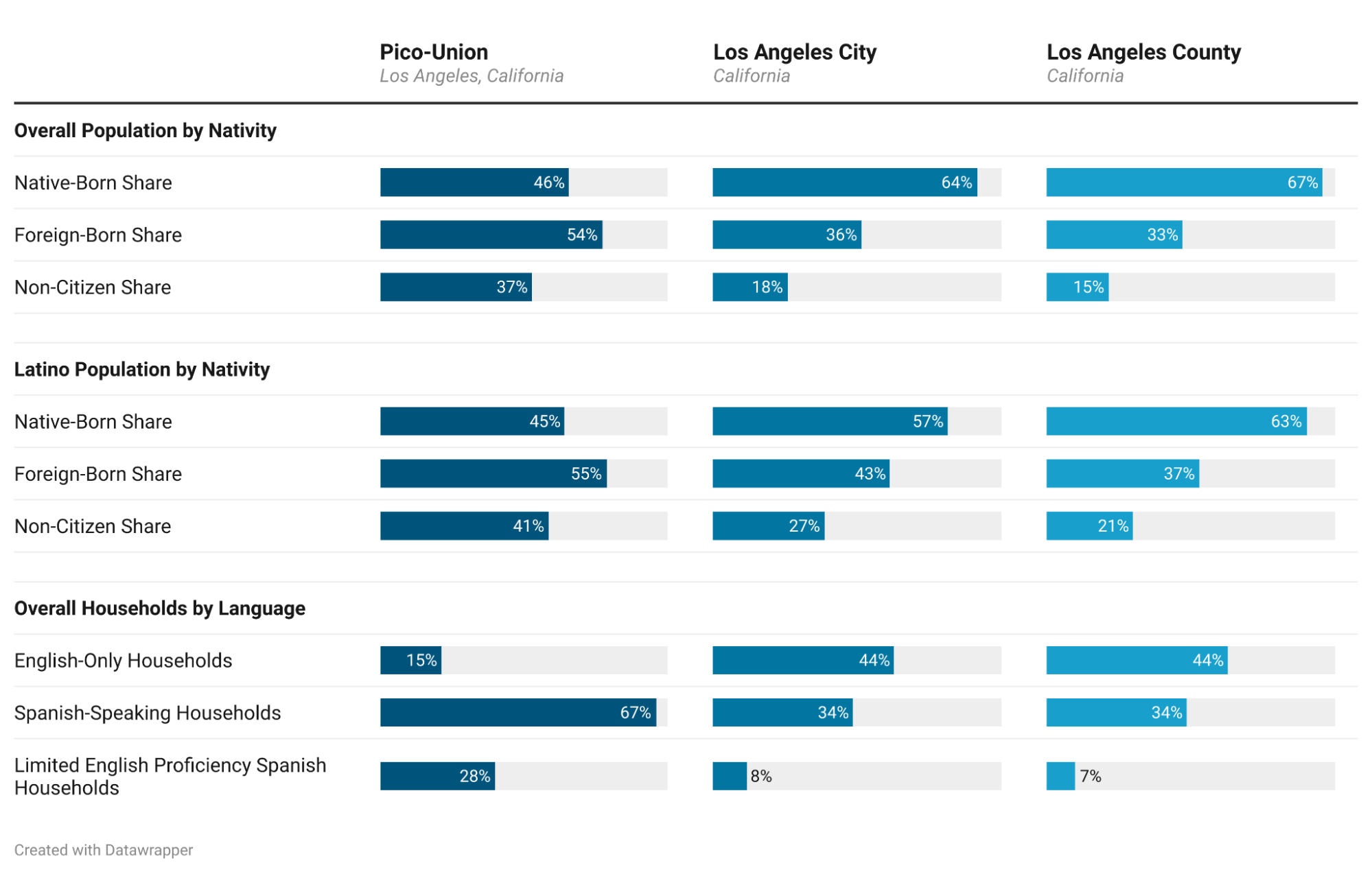
Pico-Union has a higher share of foreign-born and noncitizen individuals than Los Angeles City and County (Table 3). While the city and county populations are majority U.S.-born, Pico-Union is majority immigrant, with over half of residents born outside the U.S. (54%). Additionally, 37% of Pico-Union residents are noncitizens, more than double the share in Los Angeles City (18%) and Los Angeles County (15%). These patterns are even more pronounced within Pico-Union’s Latino population, where 41% of Latinos in Pico-Union are noncitizens, compared to 27% in Los Angeles City and 21% in the county.24 Leaders interviewed shared that many residents have more recently immigrated to the U.S., furthering their support needs.
Additionally, Pico-Union households are less likely to be proficient in English than households at the city and county levels. Over a quarter of Pico-Union households (28%) are Spanish-speaking and have limited English proficiency (meaning no household member speaks English “very well”25), more than three times the rate for the city and county (8% and 7%, respectively). Local service providers highlight that, in addition, many Pico-Union residents speak Indigenous languages and have limited Spanish proficiency. They stress the need for awareness of the needs of Indigenous communities, including a lack of language access. Martha Arevalo, executive director of CARECEN, shared the importance of intentionally engaging these communities:
“One of our organizers is Indigenous, it really drastically changed how effective we are with the community because he was able to communicate and reach them (Indigenous community members). Trust is a big issue for all immigrants, but particularly Indigenous communities where they have often had some horrible experiences trusting different organizations and different folks in their communities. Having somebody as part of our staff really made that difference in trust.”
These language barriers affect Pico-Union residents’ access to social services, community building, and economic development strategies.
Table 3. Pico-Union Population by Nativity and Households by Language
Note: Limited English proficient households are defined by the U.S. Census Bureau as those in which no member 14 years old and over 1) speaks only English or 2) speaks a non-English language and speaks English “very well.”
Source: LPPI analysis of 2023 5-Year American Community Survey Table B05001, available online; Table B05003I, available online; and Table C16002, available online.
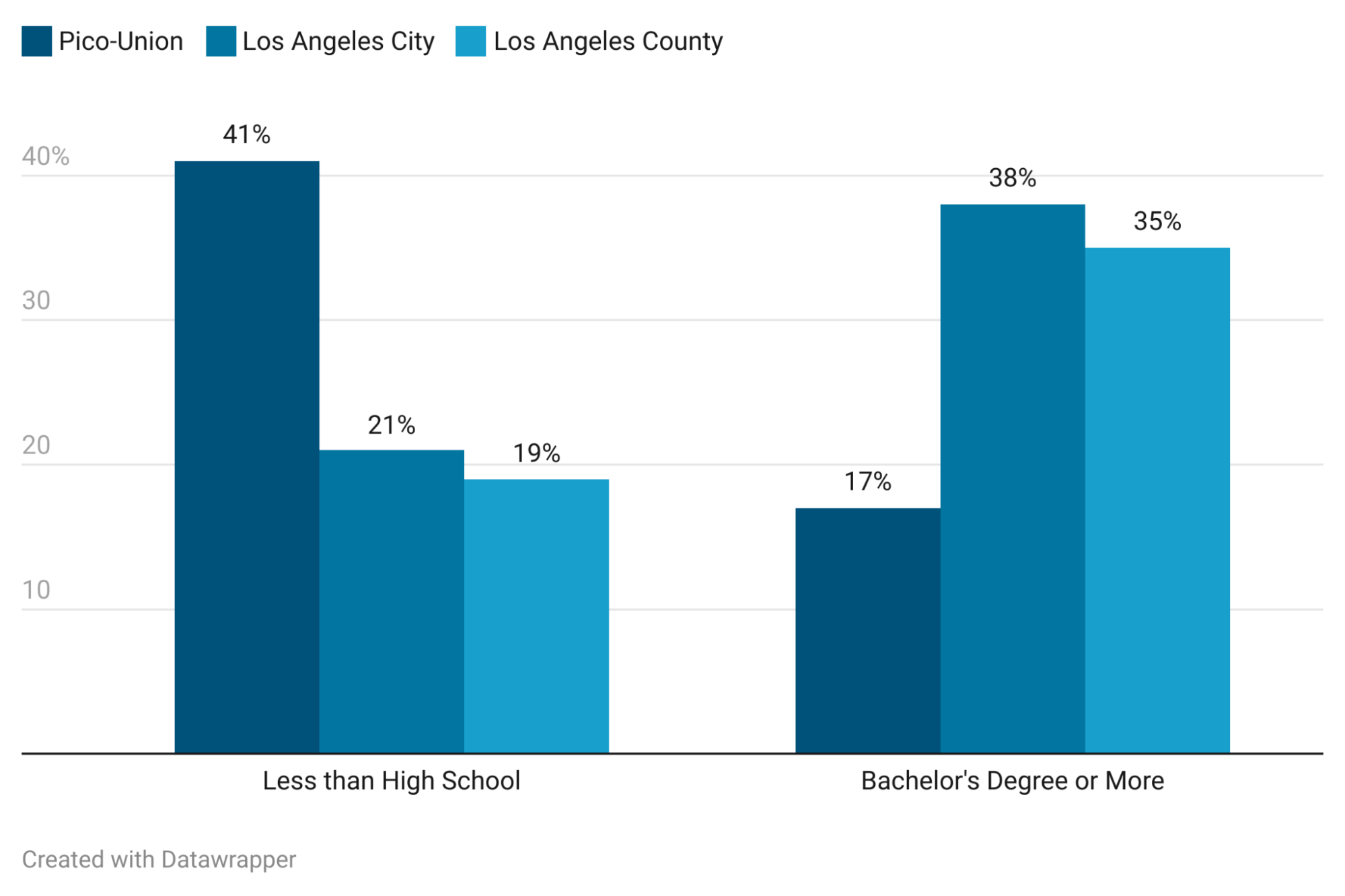
Pico-Union residents have less formal education than the city and county. About 41% of Pico-Union residents did not complete high school, roughly double the share in Los Angeles City (21%) and County (19%). While 38% of city residents and 35% of county residents hold a bachelor’s degree or higher, only 17% of Pico-Union residents have attained that level of education. To CCNP associate executive director Diana Alfaro, these gaps can be attributed somewhat to a lack of formal support for students, such as college preparation and post-secondary planning:
“There’s a lot of schools in this area, but they do not have resources to support students to go into higher education or college, and so there’s a lot of students who are seeking that. If you were to go somewhere else [in the city] a lot of the time schools do have that opportunity to teach you how to go to college. And so, learning what resources are also within the community is helpful in filling in that gap.”
Together, these demographic patterns highlight the importance of community strategies that prioritize linguistic access, cultural representation, and equity in service delivery. Many CBOs in the area are Latino- or minority-led and prioritize strategies that reflect the area’s cultural diversity and address the most essential needs. Local service providers find innovative ways to ensure that programming is accessible to all members of the community, often relying more heavily on word of mouth and ensuring language is easy to understand.
Figure 1. Educational Attainment for the Population 25 and Over in Pico-Union, 2023
Source: LPPI analysis of 2023 5-Year American Community Survey Table B15003, available online.
B. Income and Housing Disparities in Pico-Union
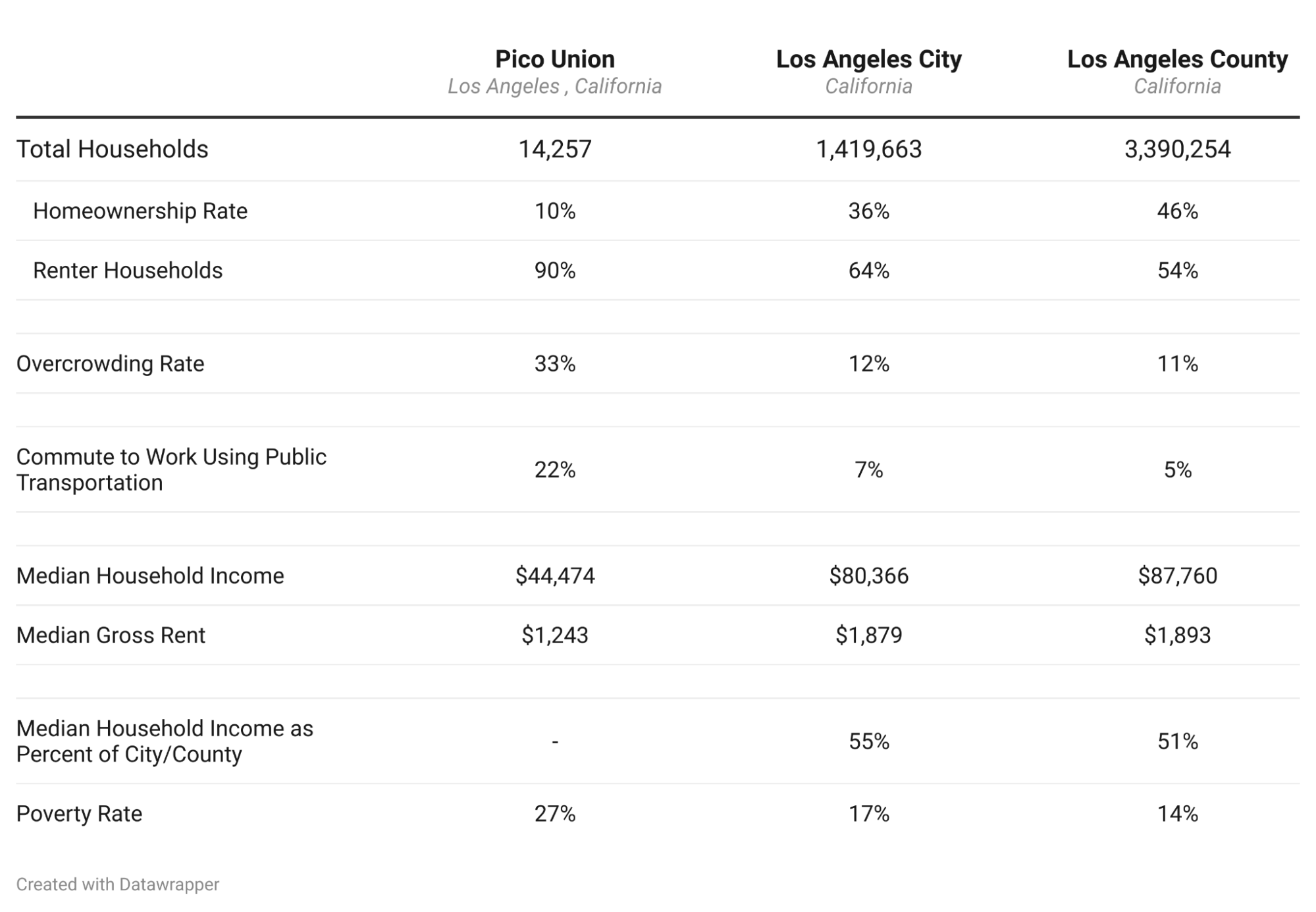
Pico-Union is a majority-Latino, working-class community marked by persistent housing and income disparities compared to the greater city and county. For example, Pico-Union households earn substantially lower median incomes ($44,500; see Table 4) than the city ($80,400) and county ($87,800). Median household incomes in Pico-Union are only 64% of the city median, and 54% of the county median, highlighting the significant income gaps compared to the broader region. While the median gross rent in Pico-Union ($1,200) is lower than in the city ($1,900) and county overall ($1,900), it remains high relative to local incomes and is inaccessible to many.
Additionally, a vast majority of Pico-Union residents rent their houses. Nine out of ten households in Pico-Union are renters (90%), compared to 64% in the city and 54% countywide. This makes Pico-Union one of the most renter-heavy neighborhoods in the region, with limited access to homeownership and greater vulnerability to housing instability.
Local CBOs highlighted Pico-Union’s elevated densities and the prevalence of packed-in living conditions as key indicators of housing strain. In 2023, a third of Pico-Union households were overcrowded (meaning a household had more people than rooms) compared to 12% of city and 11% of county residents. High overcrowding rates in Pico-Union are a legacy of historic policy decisions that barred non-white Angelenos from buying homes in suburban subdivisions and slow-growth housing policies in the 1970s.26 Diana Alfaro spoke to the detrimental effects of this overcrowding, especially during COVID-19:
“A lot of our students shared with us that they were doubled up. And I’m not saying four or five people in an apartment, I am saying 10 to 11 people living in a single room, and so there was no opportunity to be by yourself, no opportunity for them to just kind of debrief.”
CBO leaders also emphasized residents’ heavy reliance on public transportation as central to their daily lives and access to opportunities. Over a fifth (22%) of Pico-Union residents use public transportation to commute to work, compared to 7% of city residents and 5% of county residents. Many residents walk to access services and purchase goods, which is also factored into service delivery.
Local CBOs also emphasize that disinvestment and unaffordability in Pico-Union have led to deteriorated neighborhood conditions over time. Homelessness rates in the Pico-Union neighborhood were not as high as those in neighboring downtown areas in the recent LA County homelessness counts, but were still significantly higher than in most other areas of the county and city. They were marked by a higher rate of residents actively on the streets compared to the number sheltered.27 As Martha Arevalo from CARECEN shared:
“Macarthur Park has deteriorated to such a state that I think is shameful. Not for the people that are there, but for all of us, and for the leadership of the city that they have allowed this to happen. It has always had its challenges, of course. And there’s always been poverty in that area. But to this level, we haven’t seen it before.”
Both Arevalo and Alfaro highlighted conditions at nearby MacArthur Park and within the city as an example of increasing public safety issues, both directly for those unhoused community members and neighboring residents. Drug use and crime continue to be issues for the area at large.28
Table 4. Neighborhood Condition Indicators for Pico-Union, 2023
Note: The overcrowding rate refers to the share of households with more than one person per room of their housing unit. Commuting rates are for the population ages 16 and older.
Source: LPPI analysis of 2023 5-Year American Community Survey data.
C. Disproportionate Environmental Burdens in Pico-Union
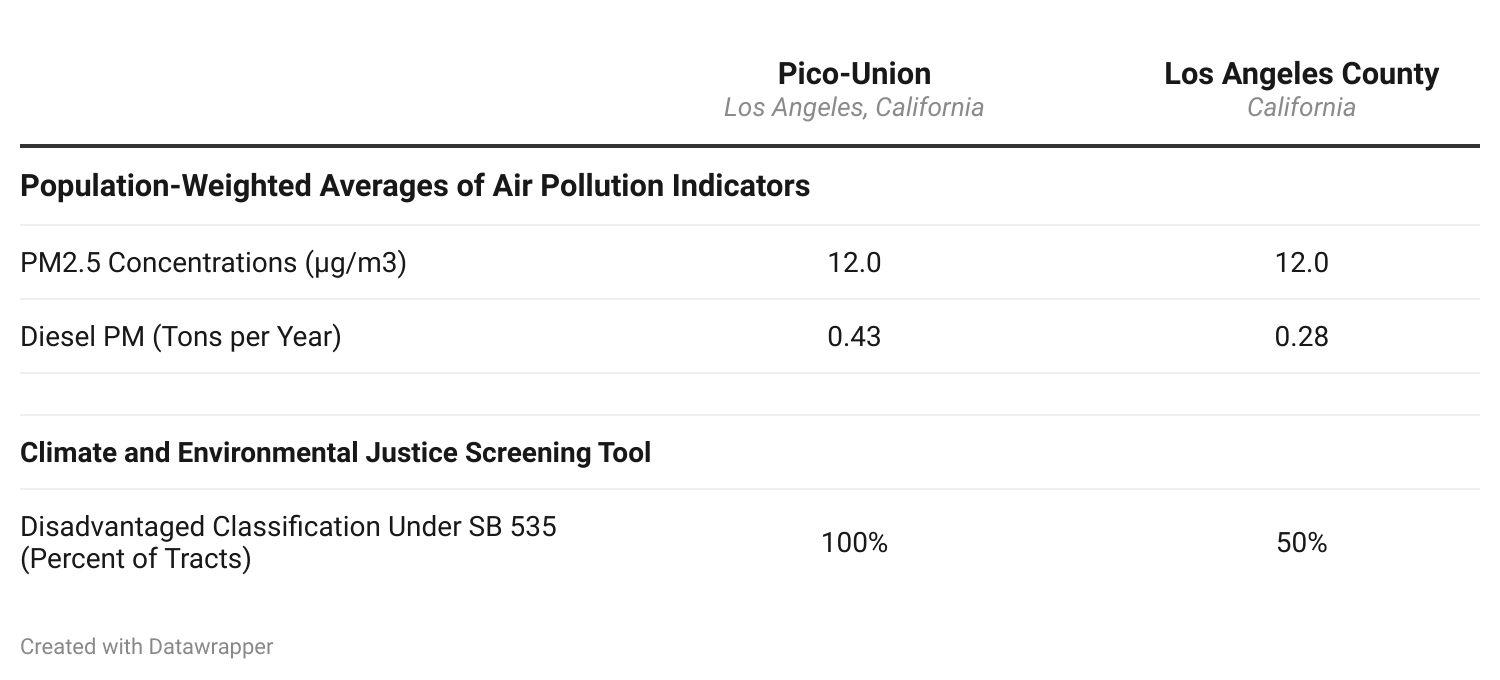
Pico-Union residents also experience elevated air pollution exposure. In Pico-Union, exposure to Diesel Particulate Matter (PM) is approximately 54% higher than the county average (Table 5). Due to the neighborhood’s proximity to the 10 and 110 freeways, residents are exposed to more pollution than residents in other county regions, despite having less access to personal vehicles.29
Due to elevated air pollution levels and other environmental burdens, Pico-Union has been designated as a disadvantaged area under SB 535, which targets specific communities in California for climate-related investments.30 All census tracts in the study area are designated as disadvantaged under SB 535, while only half of the Los Angeles County census tracts are considered disadvantaged.
Table 5. Environmental Indicators for Pico-Union
Note: California’s Senate Bill 535 requires that a portion of proceeds from the state’s Cap-and-Trade Program be directed toward disadvantaged communities (DACs) to address environmental, public health, and socioeconomic burdens.
Source: LPPI analysis of data from CalEnviroScreen 4.0, available online.
Today’s environmental conditions in Pico-Union stem from redlining, a 1930s practice that labeled Black and Brown communities as “hazardous” and cut them off from investment. Research shows redlined areas face higher pollution levels.31 In Los Angeles, many of these “undesirable” communities were sliced by freeways, cementing a legacy of environmental inequality.32 Indeed, in 1939, the Home Owners Loan Corporation graded most of the Pico-Union neighborhood as either “Hazardous” or “Declining.”33
Local providers also highlighted a lack of available green space as a concern for community members. LA Parks and Recs’ 2025 Park Assessment estimated 0.04 acres of park per 1,000 residents in Pico-Union and ranked the area 24th out of 519 in need among city sites assessed.34 Additionally, residents and local stakeholders report recurring issues of trash accumulation on sidewalks and around commercial corridors, which contributes to a perception of neglect and under-maintenance. This persistent litter and debris not only affect neighborhood aesthetics and community morale but also can create broader public health issues. Local nonprofits, such as Pico Union Project, host Grupo Verde/Team Green, an effort that takes place multiple times a week to clean the streets and perform neighborhood beautification.35 In 2024, LA City announced the installation of 90 new trash cans in the Pico-Union/Westlake area, a move officials are hopeful will further support cleanliness in the area.36
D. A Neighborhood Economy Powered by Retail and Entrepreneurship
Pico-Union is home to a vibrant entrepreneurial economy powered by vendors and entrepreneurs. In 2023, the neighborhood boasted 2,357 businesses, with almost three-quarters of them (73%) having fewer than 10 employees, highlighting the importance of self-employed individuals and microenterprises as drivers of local economic activity.
Although no single sector dominates the local business landscape, healthcare and social assistance accounted for nearly a fifth of all establishments (18%). Retail trade (12%) and other services, like dry cleaners, salons, and repair shops, round out the three largest industries in the neighborhood. Ethnic businesses in Pico-Union are primarily small and cater to the immediate needs of residents. Except for one large Latino supermarket, businesses are mostly small to medium-sized retail shops and restaurants, owned and run primarily by Latino, Asian, and Arab immigrants.
This distribution suggests a broadly service-oriented business base, with strong representation in healthcare, retail, food, and local personal services. It reflects Pico-Union’s role as a dense, mixed-use neighborhood with businesses that support both residents and the surrounding communities.
However, because quantitative data reflect formally established businesses, this analysis may underestimate the actual number of businesses in the neighborhood, as there is also an extensive network of informal businesses, such as street vendors selling food, which are essential to the local economy and the neighborhood’s identity. As Diana Alfaro highlighted, informal and independent businesses are the cornerstone of the local economy:
A big part of the [neighborhood] culture is independent business owners, and street vending is very [important] to Los Angeles in general but also in this specific area. A lot of our community members work as street vendors, or they work untraditional jobs, or they are nannies, or they are house cleaners, or they are day laborers. We’re seeing more people who are independent workers compared to those who have a W-2 job. A lot of our families are cash earners instead of check earners.
Neighborhood assets, such as CARCEN’s Day Labor Center, are vital in supporting the fight for safe and reliable work opportunities for the area’s day workers through skill development, wage theft training, English classes, legal services, and more. Additionally, providers in the area stress the need for formal support from the city and county to ensure that vendors receive formal support, training, and monitoring.
Figure 2. Industry Mix of Businesses in Pico-Union, 2023
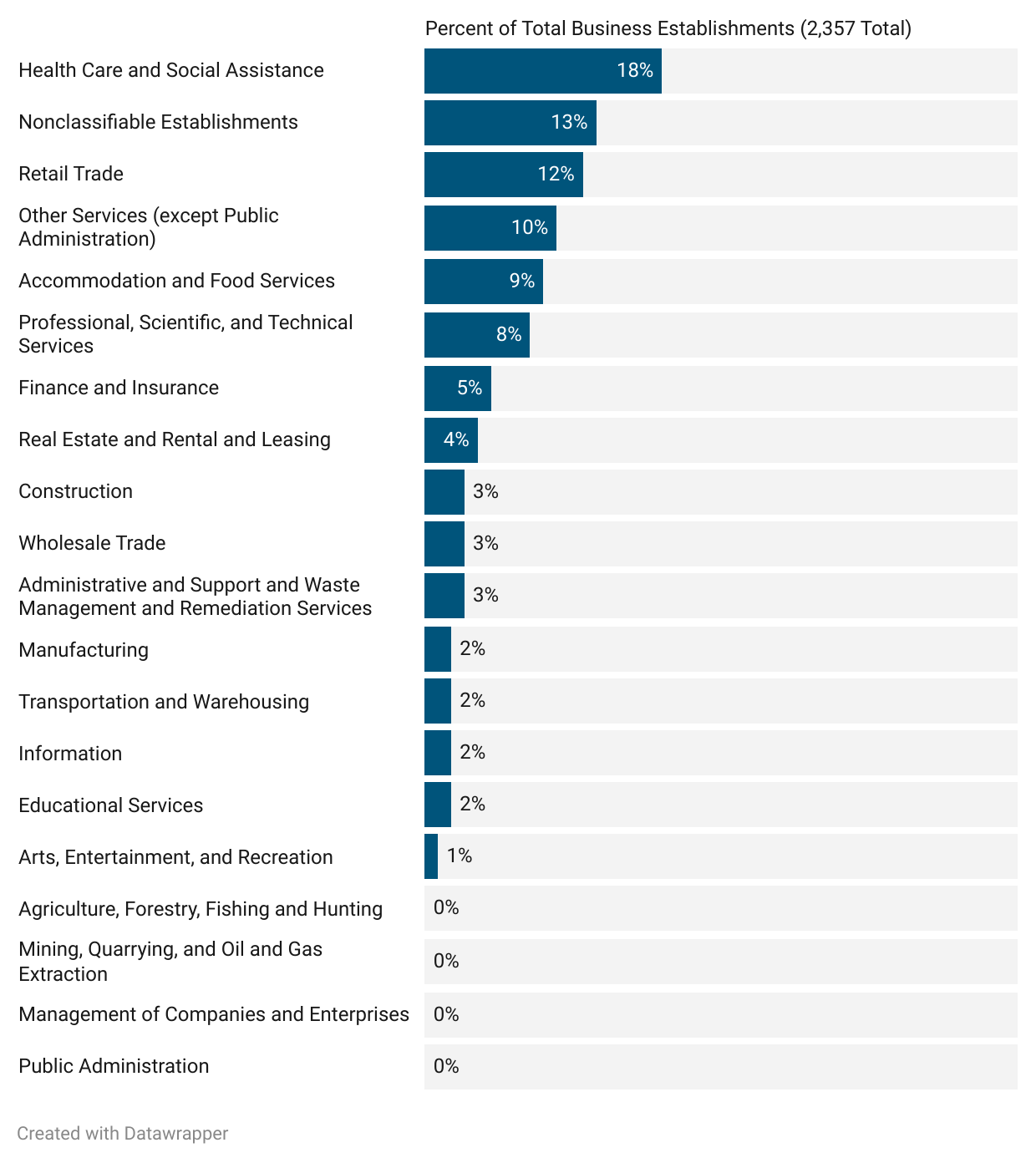
Notes: Industries reflect two-digit NAICS sectors. In 2023, there were 2,357 total businesses in Pico-Union.
Source: LPPI analysis of 2023 Data Axle data.
COVID-19’s Impacts on Pico-Union
The pandemic exposed deep-rooted inequities in health, access, and opportunity in Pico-Union, like in many predominantly Latino communities across the nation. High death rates were driven by limited healthcare access, environmental risks, and systemic disinvestment.
A. Disproportionate COVID-19 Mortality in Pico-Union
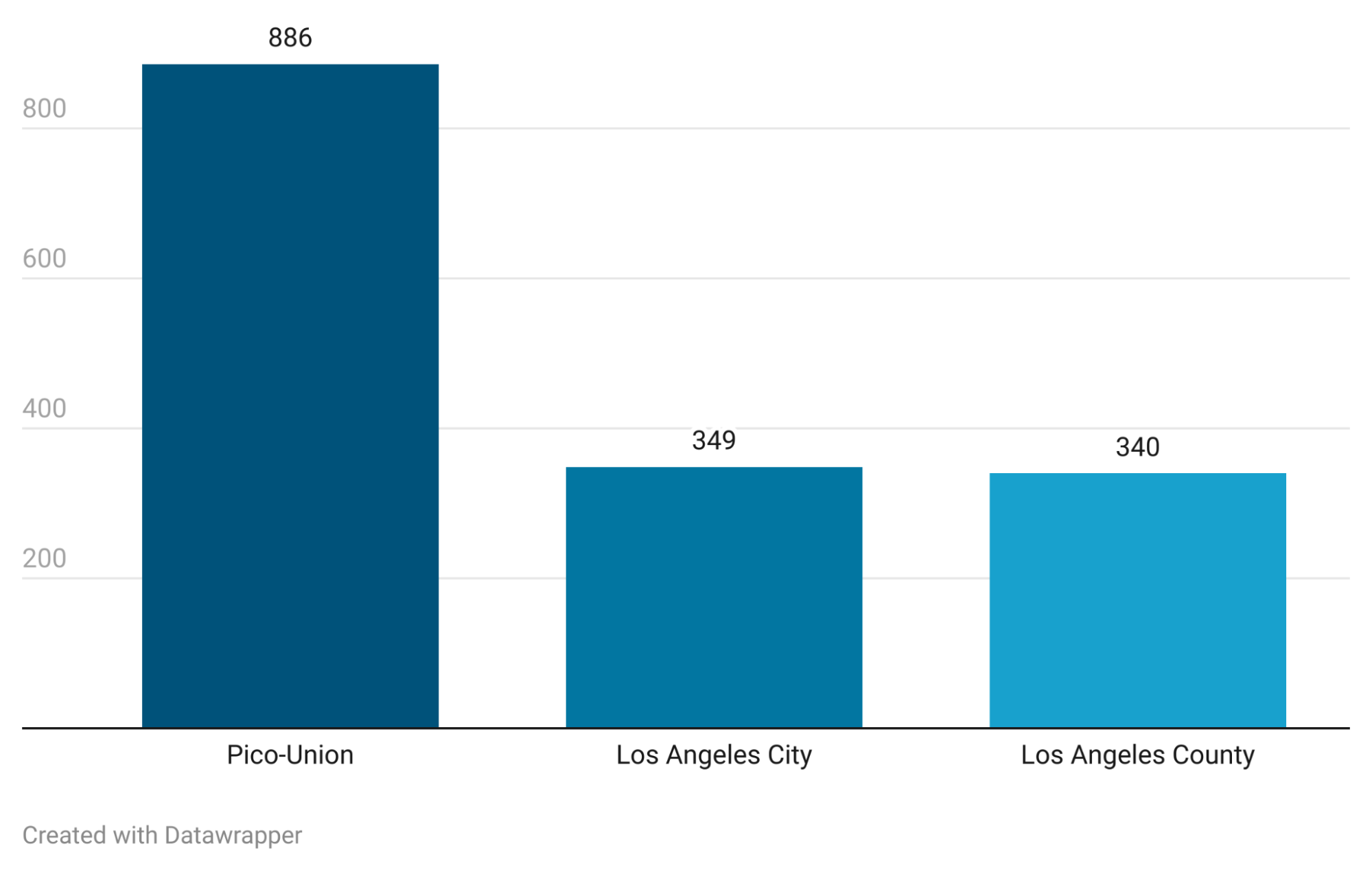
From March 2020 to December 2023, COVID-19 deaths in Pico-Union were among the highest in the region (Figure 3). Based on Los Angeles County Department of Public Health data, cumulative COVID-19 mortality rates for Pico-Union were 886 per 100,000 residents—over twice the city and county rates (349 and 340, respectively). Pico-Union ranked in the top 10 of Los Angeles city neighborhoods for COVID-19-related deaths.37 LA City Council District 1, which Pico-Union is part of, recorded 8% of county deaths by July 2020 despite being only 2% of the county’s population.38
Figure 3. Cumulative COVID-19 Mortality Rates in Pico-Union, Los Angeles City, and Los Angeles County, March 2020 to December 2023
Cumulative COVID-19 Mortality Rates per 100,000 Residents
Note: COVID-19 mortality data for the Pico-Union neighborhood is based on neighborhood boundaries defined by the Los Angeles County Department of Public Health. These boundaries may not perfectly align with the geographic boundaries used in this study, but largely overlap.
Source: Los Angeles County Department of Public Health, available online.
High COVID-19 mortality rates in Pico-Union are linked in part to high overcrowding rates. The New York Times estimated in 2021 that 40% of homes in the area experienced overcrowding, putting many residents at risk of infection.39 With many people living in close quarters, few Pico-Union households had the ability to maintain social distancing.40 Additionally, many residents worked low-wage, essential jobs, meaning they had little choice but to continue working in-person and exposing themselves to the coronavirus.41 Access to testing and vaccination, alongside other essential services, was challenging for the many Pico-Union residents who rely on public transit and lack access to a car. As shared by Diana Alfaro from CCNP:
“When COVID testing first came out, you had to go test at Dodger Stadium in your car. That does not work for our community, so we were doing walk-in testing. We pivoted [to vaccination] because we heard the community say, “it isn’t until CCNP brings this service that I will do it.”
Providers in the area focused on supporting masking, testing, and vaccination for the community, as well as educating underserved residents about the dangers of COVID-19 and precautions they could take. CBOs, such as CCNP, launched a Promotoras program throughout the area, a peer-to-peer health education model that has been used with great success in rural and underserved areas of the United States and Latin America. While some services were provided virtually, both CCNP and CARECEN emphasized the importance of maintaining in-person services, especially given the limited access to cars for many residents. This work was vital in ensuring the survival of many non-English speaking residents, who would otherwise have received little guidance and valued the use of trusted providers. As Martha Arevalo, from CARECEN, described:
‘We made the decision to keep the Day Labor Center open. Obviously, we had some safety protocols and COVID protocols, but I really think that it was the right decision. It really was the place that the labor community and their families could go to for assistance and help. They didn’t go to the county, they didn’t go to the city, they went to our center.’
B. COVID-19 Business and Social Impacts
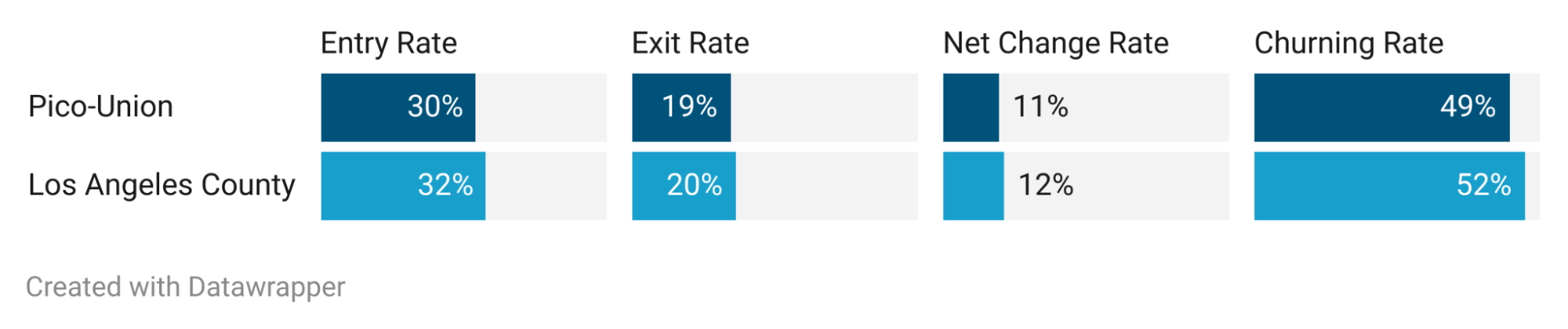
Although micro and informal businesses in Pico-Union experienced significant disruptions during the pandemic, Pico-Union’s formal business dynamics closely mirrored those of Los Angeles County. From 2019 to 2023, the total number of businesses grew 11%, slightly slower than businesses countywide (12%). Over this period, Pico-Union also experienced slightly fewer new business openings (30%) than the county (32%), as well as slightly fewer closures (19% vs. 20%), suggesting less business turnover than countywide.
While Pico-Union has not experienced rapid business growth since the pandemic, more establishments have opened than closed since 2019. These data suggests a stable local business environment through a pandemic period marked by uncertainty and change.
Figure 4. Business Dynamics in Pico-Union and Los Angeles County, 2019 to 2023
Source: LPPI analysis of 2019 and 2023 Data Axle data.
Nevertheless, workers in the area were hit hard by the pandemic. While only 6% of LA County’s workforce is employed in the accommodation and food services industry, 17% of Pico-Union’s employed population works in this industry, a sector that was hit particularly hard by pandemic-related layoffs.42 Prior to the pandemic, the Pico-Union area experienced a higher unemployment rate compared to the rest of the county.43 While many essential workers were forced to continue on, many also found themselves laid off or unable to work.
Additionally, Pico-Union residents experienced food insecurity related to the pandemic, similar to the other case sites studied for this portfolio. Due to the loss of wages associated with these layoffs, many families were forced to make deep sacrifices and still found themselves unable to afford essentials.44 CBOs worked to provide access to food through weekly distributions, even when their own resources became scarce.
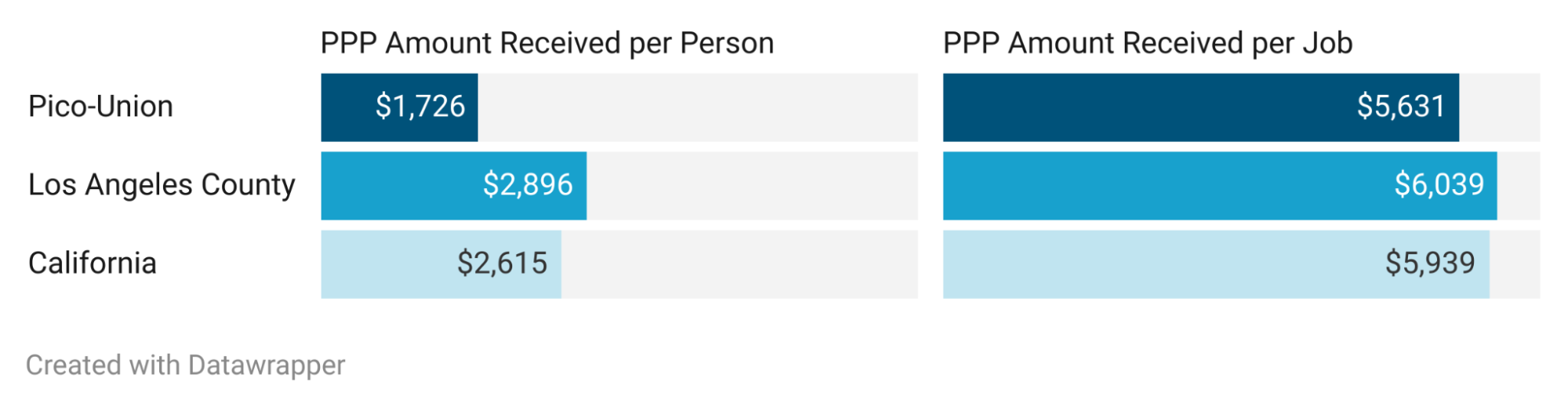
Pico-Union also received far less federal relief through the Paycheck Protection Program than Los Angeles County (see Figure 5). PPP was a pandemic-era loan program intended to help businesses retain employees. Pico-Union received just $1,700 per resident and $5,600 per job, compared to $2,900 per resident and $6,000 per job in the county. The data indicate that federal pandemic relief programs did not reach Pico-Union equitably.
Figure 5. Paycheck Protection Program (PPP) Relief Received in Pico-Union, Los Angeles County, and California
Sources: LPPI analysis of PPP data from U.S. Small Business Administration data (2024), available online. Population data is from the 2017-2021 5-Year American Community Survey. Job data is from the 2019 Longitudinal Employer-Household Dynamics (LEHD) dataset.
Technology access remained a large issue for many Latino families in the area, who, prior to the pandemic, struggled with a lack of access and awareness of many digital tools. Alfaro stressed that making the transition to virtual was difficult even for their own organization, if not impossible for many of the families they serve:
“As an organization, we didn’t have cell phones, laptops, Zoom access. And we’re an organization who just proudly celebrated 25 years. Just knowing that the infrastructure needed a change internally, how much more work did we need to do for our families and our communities?
While they worked to support families in gaining access to technology, Wi-Fi, and setting up emails and Zoom access, they also ensured that as many services as possible remained in-person. In this way, they maintained a vital lifeline for Pico-Union residents, supporting them economically, physically, and socially.
Navigating Crises in Los Angeles in 2025
Pico-Union and the larger Los Angeles community were also devastated in 2025 by a series of unique crises impacting residents’ well-being. In January 2025, a series of wildfires ravaged parts of Pacific Palisades and the Altadena–Pasadena foothills in Los Angeles County, resulting in at least 30 deaths, the destruction or damage of over 15,000 structures, and creating widespread stress and disruption throughout the county.45 In Los Angeles, a recent surge in ICE raids has targeted immigrant neighborhoods, leading to widespread fear among Latino residents and the undocumented community. The Pico-Union community has been at the center of much of this terror, preventing many residents from attending work, school, or carrying out other basic daily activities. The 90015 zip code, which encompasses Pico-Union, was identified in July 2025 as one of the top 10 ZIP codes with the highest number of immigration enforcement actions reported to the CHIRLA Response Network.46 As Martha Arevalo from CARECEN shared:
“Our community has been in this constant state of crisis. And not only does that affect the economic part of how we provide our services and our programs and the work that we do, but also the mental health of our community. Our community lives in constant fear and terror when just existing and going to work and standing on the corner means that you could disappear every single day. We’ve also seen a significant number of people who have left, who have gone home, who have said we can’t take this anymore. But we’ve also had a lot of workers detained and disappeared.
CARCEN’s Day Labor Center itself has been raided by immigration agents multiple times, most recently with tear gas and rubber bullets, leading workers and street vendors to seek protection. Other CBOs in the area report similar violent interactions, on top of already facing scrutiny for their work with marginalized communities under the new federal administration and constantly dwindling resources to support even their own work. Nevertheless, CBO leaders remain steadfast in their commitment to finding tools to support the undocumented community and are speaking out against raids despite the professional and personal risk. Providers stress the importance of trust and dignity for all residents who use their services, and ensure they are honest and creative when finding specific support for the community regardless of citizenship status.
Additionally, the lessons many CBOs learned about how to operate in times of crisis during COVID may be vital to their ability to protect communities today. They reported an ability to move quicker to meet needs in collaboration with others, a willingness to go above and beyond as new challenges arise, and a deeper analysis of the issues impacting their ability to function. As Rudy Espinoza from Inclusive Action for the City recounted:
“Last week the fire started. Several of our colleagues were evacuating, including myself. [Within a couple days] I messaged my director like, “Some of our friends are losing businesses in Altadena. We have to start thinking about what we’re going to do to support them.” Then, a couple of hours later, one of my board members reached out. Next day, I call our Operations team and ask, “What would it take to put together an emergency fund?” Hours later, we had it together. We have a culture here of collaboration and also a culture of moving quickly, and we were willing to invest a little bit ourselves.”
For many leaders, crisis management has simply become a part of nonprofit management, with staff and policy dedicated to meeting the ever-evolving demands of today. Nevertheless, many of these providers remain at risk if these pressures continue, meaning even more suffering for the residents who have come to rely on their support.
Economic Development Efforts in Pico-Union
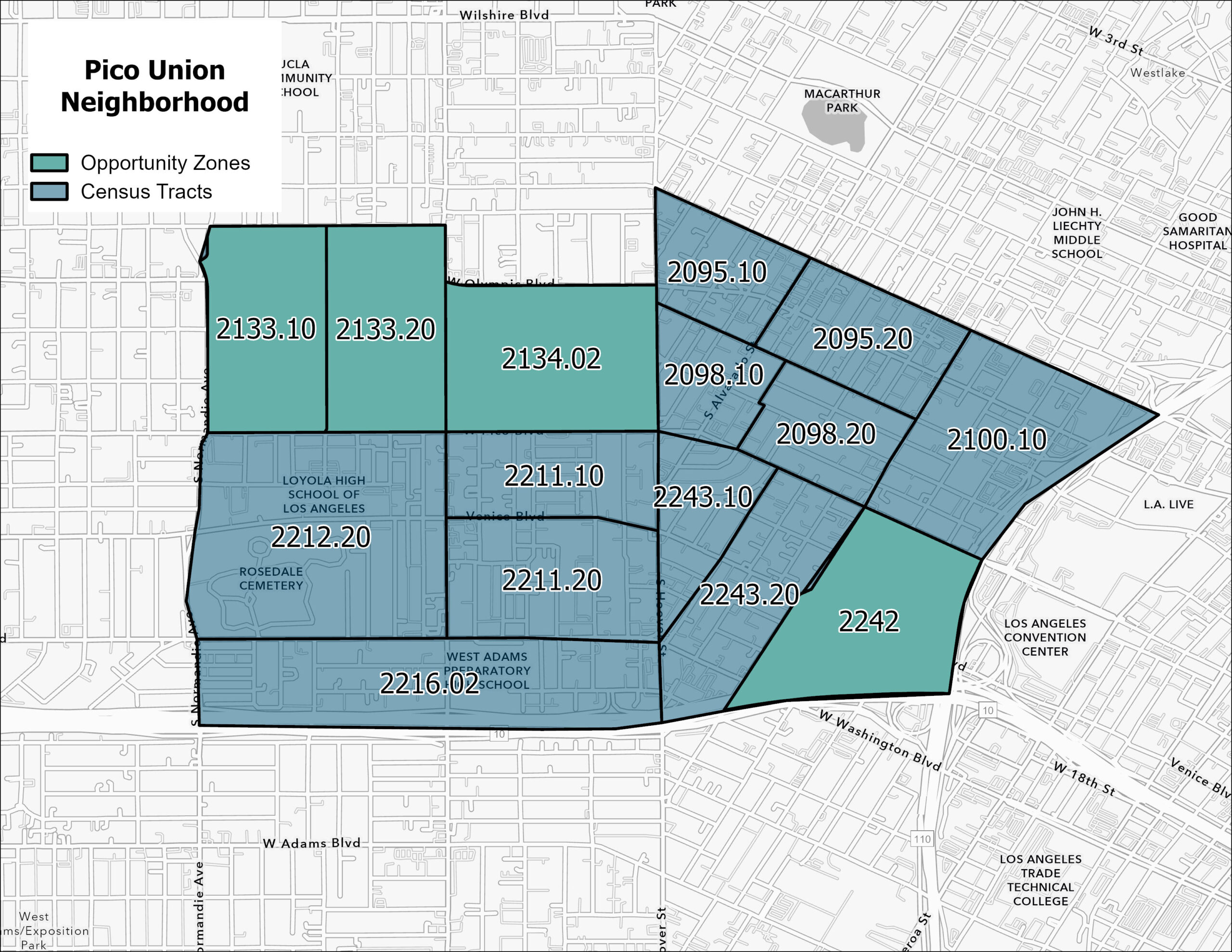
The Pico-Union study area spans multiple census tracts outlined in red. Only four of these—2133.10, 2133.20, 2134.02, and 2242—are designated as federal Opportunity Zones (shaded in green). An Opportunity Zone is a federally designated area where investors receive tax incentives for putting money into local businesses or development projects. For neighborhoods like Pico-Union, this designation can attract much-needed private investment to support housing, job creation, and infrastructure improvements.47 Though the benefits depend on whether those investments genuinely serve existing residents rather than accelerating displacement.
Map 2. Federally-Designated Opportunity Zones in Pico-Union
Source: U.S. Department of Housing and Urban Development, available online.
In 2004, the Pico-Union neighborhood became Los Angeles’ nineteenth Historic Preservation Overlay Zone, in recognition of many of its single-family homes’ architectural history and prestige.48 In August 2012, the City of Los Angeles designated a portion of Vermont Avenue in Pico-Union as the El Salvador Community Corridor; parts of Pico-Union are also being considered for designation as a Central American Historical District.49 As part of the Los Angeles Economic Development Zone, the area has a program for its underemployed and unemployed residents. With city and county redevelopment funds, it provides educational training, employment services, and training, as well as a licensed vending program and restaurant.50
Nevertheless, CBO leaders stated that community members have felt few of the benefits of that development. From their perspective, private development efforts, many of which they had previously opposed due to concerns about displacement, had declined dramatically during COVID-19 and afterward, leaving the area in further disrepair and dilapidation. They hope to balance advocacy for new financial investment in the neighborhood with demands that those dollars be allocated to projects that are both affordable and accessible to very low-income residents. Despite the governmental attention, for many, these CBOs provide their main access to social services and opportunities for the future. Martha Arevalo shared her hopes for what future development could look like for the community:
“We need to make sure that Pico-Union truly is seen as part of the greater region and city as an important, vital part. Leaders have to number one, make sure that they are including the community in how we envision the area, but number two, really invest in it. It’s not going to happen unless there’s that investment, and it can’t only be from the outside in, it has to be investing in the people themselves.”
Community-Led Interventions
A. Challenges and Opportunities Working with Recent Arrivals
Providers in the area described one of the unique aspects of working with Latino populations in the Pico-Union area as that many residents have only been in the United States for a few months or years. Whereas in other parts of the city or county the Latino community may be well-established across generations, many Pico-Union residents are still struggling to get themselves and their families oriented and settled. This can create issues in service provision related to eligibility for non-US citizens, language barriers, or simply getting clients acquainted with the new systems and structures they must navigate. Providers interviewed emphasized the importance of meeting clients where they are in the process and being realistic and well-versed in finding resources for those who may not qualify for public support. CBO leaders sought ways to support all community members, regardless of their race, ethnicity, citizenship, or income. When it comes to efforts towards community mobilization, leaders saw the newness of many of the immigrants in the area as both a challenge and a source of power. Martha Arevalo from CARECEN discussed this experience:
“This is a community that is constantly moving and finding new opportunities…so it makes it very hard to continue to have that relationship with folks that we serve and work with. But at the same time, I think that newcomers just have this incredible spirit of survival and hard work… Because their experiences with being involved in their community has sometimes been the reason why they’ve had to migrate…But they are really savvy, and have a deep understanding of politics and what it means to their daily lives.”
As new immigrants work to build their lives in the United States, they may be more likely to relocate to different areas in search of work or as they establish more connections.51 This increased pattern of migration can make it difficult for providers to establish the deep relationships with clients needed to engage them in more comprehensive advocacy. Additionally, residents who do not yet feel a strong connection to the Pico-Union community may not feel it is worth sacrificing time and taking potential personal risks to be politically active. Nevertheless, for those residents who do feel inclined or who have deeper roots, leaders felt that their political experiences in their home countries often motivated them to be more engaged civic leaders and instilled in them a deep sense of justice and democracy.
B. Focus on Survival Work
CBO leaders also shared the feeling that most of their programming was focused on meeting the daily survival needs of clients, to the extent that it was difficult for them and residents to feel they had the capacity to undertake deeper upward mobility and prosperity-building work. Most of the services provided focus on food access, small cash/rent assistance, immigration services, and finding employment. Many families in the Pico-Union area live in persistent financial precarity, struggling to make ends meet each month without external assistance. Local CBOs, therefore, are a lifeline for many, ensuring that they can stay housed and fed each month. However, this can make it difficult for them to imagine a future with more, as Alfaro from CCNP shared in her reflection:
“A lot of our families are barely making ends meet, cannot even afford to pay their rent, so then that’s what we’re doing, we’re helping them face that challenge. The challenge then would be getting to the next step. Moving them upwards so that they’re no longer in this revolving door. So, we’re here to service anyone, but the dream is moving towards that direction because our community is being well-invested in using public dollars. And that the community wants to grow within the community.”
While work in other communities across the country is focused on wealth-building and community development, leaders felt that these more macro interventions have not been incorporated in Pico-Union. Development support is needed to ensure that the services that keep this community remain funded. By ensuring the needs of these most vulnerable residents are being met through private and public partnerships, it would be easier for these communities to engage in programming that helped move them to deeper stability.
Leaders also pointed to growing up in similar circumstances as a source of resilience and determination to improve the communities they came from. For instance,
Rudy Espinoza from Inclusive Action for the City shared how “proud of who I am, I am so proud of people. I was thinking this morning on the drive into the office, that I really feel I was built for this. All the stress growing up, all the triggers. I feel like I’m ready for this. A lot of Latinos have experienced similar things.” Especially in these moments of crises, immigrant communities have been able to apply lessons from their background to keep their community moving forward.
C. Building Coalition and Partnerships
As seen across sites, Pico-Union CBO leaders stressed that collaboration was one of their most vital tools in making life-saving interventions for the community. Despite the high concentration of support services in the area,52 there often remains far more need in the community than any CBO can support alone. Given that many organizations are in struggles for resources and support, much like community members, especially in times of crisis, partnership remains essential. If a resident does not qualify for services at a specific organization, they will often be referred to another local partner to ensure that they still receive the support needed. Leaders interviewed also demonstrated that, especially during the COVID-19 crisis, partnering with other local CBOs helped them get the community aid in times when other resources were stretched too thin. Diana Alfaro from CCNP described this by saying:
“In 2011, we first started our food distribution program in partnership with the LA Regional Food Bank. But during the pandemic, they had no food. We asked, how are we going to feed families when even our resources were not coming through? A really important partner during that time was United Way and the Sam Simon Feeding Families Foundation. At the same time, government officials saw the need for more access to food and provided CCNP with funding to purchase hot meals and deliver them to families and seniors. Our weekly food distribution grew from about 100 to 150 people to more than 600 people.”
Through innovative partnerships with local organizations and government leaders that have been built over decades, leaders can ensure that new crises don’t interrupt the work needed for communities. These grassroots collaborations are becoming increasingly crucial in the area as government cuts continue to impact funding for programming and services. Additionally, connections to elected officials, philanthropic foundations, and research institute leaders were powerful tools that allowed for CBOs to go beyond direct aid in order better to understand long-term strategies for change and client success. Many CBOs doing work in the area such as CARCEN are member organizations of the National Day Laborer Organizing Network (NDLON). Coalitions like these ensure that even direct-service CBOs remain part of larger policy and advocacy efforts for the residents they serve.
D. Emphasis on Community Power
Both CBO leaders focused on direct service provision and investment, emphasizing that solutions to the everyday issues Pico-Union residents face must come from those who experience these challenges firsthand. A guiding theory for NDLON member organizations is “solo el pueblo salva el pueblo (only the people can save the people).” For organizations providing direct services and advocacy, this means leveraging the expertise within the community when assessing needs and developing programming, as well as hiring directly from the Pico-Union community. For immigrant communities such as Latino and indigenous residents, trust and established relationships can help to overcome the hesitancy many feel in seeking out help. Trusted leaders from the community can effectively communicate the availability of essential services and alleviate concerns about eligibility or potential repercussions for using these services. CBO leaders at organizations such as CCNP reported that for many residents, staff are an extension of the community, whom they look forward to actively engaging beyond simply getting help. Leaders argue that only development projects that actually engage and uplift the community already living in Pico-Union will be successful at improving outcomes in central Los Angeles.
To CBOs that provide funding, working directly with impacted communities and organizations entrenched in these communities provides valuable insights into what projects the community wants to see and support. It is these staff with lived experiences both inside and outside the organization who offer crucial insights into how the project will actually impact the neighborhood, and these staff members speak often about how their wisdom has changed the direction of programs for the better. As Rudy Espinoza from Inclusive Action for the City articulated:
“One of the things that you’ll find here at our organization is a team full of lived experience. There’s nothing that beats that from a skill set standpoint. When you’re developing something, they’re able to see things that other people can’t see. [When building out work] I’m bringing my own lived experience thinking about, “what would my mom say about this?”
This sort of truly community-led planning and investing requires intentional effort to outreach and educate community members, especially those unfamiliar with the American political system. Many individuals struggle to engage in community advocacy despite their interest, due to the need to focus on their daily living challenges, which is a further barrier to this sort of work in Pico-Union. CBO leaders believed that more investment was necessary in this aspect of community development work, which remains under-supported. They called for more investment in innovative power building projects rooted in the community itself, led by organizations that have already developed long-term relationships with the constituents to be served.
Conclusion
Pico-Union illustrates both the profound consequences of structural disinvestment and the enduring strength of immigrant communities that have long been expected to survive with too little support. As this case study shows, residents face compounding challenges rooted in housing precarity, economic exclusion, environmental burdens, and repeated crises; from the COVID-19 pandemic to intensified immigration enforcement and climate-related disasters. Yet these same conditions have also given rise to deeply rooted, Latino-led organizations that serve as lifelines for the community, providing care, protection, and opportunity when public systems fall short.
Community-based organizations in Pico-Union have demonstrated that effective economic development in under-resourced neighborhoods cannot be separated from survival work, immigrant defense, and community trust. Through culturally responsive service delivery, rapid crisis response, and long-term organizing, local leaders have not only met immediate needs but also built the infrastructure for collective action and resilience. Their work reflects an understanding that economic stability is inseparable from dignity, safety, and the ability of residents to remain in the neighborhoods they call home.
At the same time, this case study highlights the limitations of expecting community organizations to bear the burden of systemic failures indefinitely. Many Pico-Union leaders operate in a constant state of crisis response, with limited resources and growing demands, constraining their ability to move beyond stabilization toward long-term wealth-building and prosperity. Without sustained public and philanthropic investment, the very institutions that have kept the neighborhood afloat remain at risk. Rudy Espinoza from Inclusive Action for the City expanded on this idea, explaining:
“I do think that there’s a lot of big institutions that want to help. But there’s this whole philosophy that you can make money off of justice. There’s been an obsession with market rate returns and unwillingness to invest in things that are not going to have an immediate financial return. Some of the things that we’re facing are not about financial returns. We’re trying to repair things in communities that we as a society have harmed. How do we communicate to funders and investors that they have to invest more, and they have to expect less in financial return, if anything at all.”
For policymakers and funders, Pico-Union offers a clear lesson: durable and equitable economic development must be community-led, immigrant-inclusive, and grounded in lived experience. Investments that prioritize market returns over community well-being risk reinforcing displacement and exclusion. In contrast, supporting trusted local institutions by funding core operations, protecting affordable housing, recognizing informal economies, and investing in community power-building creates the conditions for neighborhoods like Pico-Union not only to recover but to thrive. Centering the voices, leadership, and priorities of those most impacted is not only a moral imperative; it is essential to building stronger, more resilient communities across Los Angeles and beyond. As Martha Arevalo from CARECEN shared:
“We want to make sure that the people that are affected directly are the head, the heart, the voice of whatever campaign that we take on…we want to make sure that the people that are directly affected are the ones who are thinking about and envisioning the type of community that they want.”
Acknowledgments
This brief was made possible with the generous support of the James Irvine Foundation. The research team extends its gratitude to Alberto Murillo for early literature review support, Julia Silver for reviewing this report, Angelina Wu, Lindsey Mardona, and Miriam Torres-Sanchez for visual support, Cristian Hernández, Jorge Padilla, and Bryzen Enzo Morales for research support, Eduardo Garcia for review, Marissa Esthimer for editing, and Jared Jimenez for support with cartography. We would also like to thank Rudy Espinoza, Diana Alfaro, and Martha Arevalo for their time and commitment to this project.
The UCLA Latino Policy and Politics Institute acknowledges the Gabrielino/Tongva peoples as the traditional land caretakers of Tovaangar (the Los Angeles basin and Southern Channel Islands). As a land grant institution, we pay our respects to the Honuukvetam (Ancestors), ‘Ahiihirom (Elders), and ‘Eyoohiinkem (our relatives/relations) past, present, and emerging.
About Our Organization
The UCLA Latino Policy and Politics Institute addresses the most critical domestic policy challenges facing Latinos and other communities of color through research, advocacy, mobilization, and leadership development to expand genuine opportunity for all Americans.
Disclaimer
The views expressed herein are those of the authors and do not necessarily reflect those of the University of California, Los Angeles, as a whole. The authors alone are responsible for the content of this report.
For More Information
Contact: lppipress@luskin.ucla.edu
© April 2026 by the Regents of the University of California, Los Angeles. All rights reserved. Printed in the United States.
Endnote
1 Paul M. Ong, Andre Comandon, Nocholas DiRago, and Lauren Harper. “COVID-19 Impacts on Minority-Owned Businesses and Systematic Inequality,” UCLA Center for Neighborhood Knowledge, October 2020, available online; Robert Fairlie, “The Impact of COVID-19 on Small Business Owners: Evidence from the First Three Months after Widespread Social-Distancing Restrictions,” Journal of Economics and Management Strategy 29, no. 4 (2020): 727-40, available online.
2 U.S. Small Business Administration, The Impacts of COVID-19 and Racial Disparities in Small Business Performance (Washington, DC: U.S. Small Business Administration, August 2022), available online.
3 Paula Nazario, Silvia R. González, and Paul M. Ong, Latino and Asian Households in California are Behind on Rent and Behind in Access to State Relief Program (Los Angeles: UCLA Latino Policy and Politics Institute and UCLA Center for Neighborhood Knowledge, April 4, 2022), available online; Shreela V. Sharma, Ru-Jye Chuang, Melinda Rushing, Brittni Naylor, Nalini Ranjit, Mike Pomeroy, and Christine Markham, “Social Determinants of Health–Related Needs During COVID-19 Among Low-Income Households With Children,” Preventing Chronic Disease 17 (October 2020): 200322, available online.
4 Paul M. Ong, Silvia R. González, Chhandara Pech, Kassandra Hernández, and Rodrigo Domínguez-Villegas, Disparities in the Distribution of Paycheck Protection Program Funds Between Majority-White Neighborhoods and Neighborhoods of Color in California (Los Angeles: UCLA Latino Policy and Institute, December 17, 2020), available online.
5 Inclusive Action for the City is a Los Angeles-based community development financial institution that serves underinvested communities and builds thriving local economies by improving access to transformative capital, and advancing policy through collaborative research and community-driven advocacy. For more information, see “About,” Inclusive Action for the City, Accessed October 17, 2025, available online.
6 Central City Neighborhood Partners (CCNP) is a non-profit organization located in the Los Angeles neighborhood of Westlake, and it provides a variety of community development services to low-income residents in Los Angeles, including the largest anti-poverty program in the city. For more information, see “Our History,” Central City Neighborhood Partners, Accessed October 17, 2025, available online.
7 The Central American Resource Center (CARECEN) is a community-based organization that provides low cost immigrant legal services, avid in changing unjust policies, and defending immigrant, education and workers rights. For more information, see “About Us,” CARECEN, October 17, 2025, available online.
8 Los Angeles Conservancy, “Layers of History: Pico Union Self-Guided Walking Tour,” October 2022, available online.
9 Ibid.
10 Anastasia Loukaitou-Sideris and Judy Hutchinson, “Chapter 10: Social Networks and Social Capital: Latinos in Pico-Union,” in Jobs and Economic Development in Minority Communities, eds. Paul Ong and Anastasia Loukaitou-Sideris (Philadelphia, PA: Temple University Press, 2006).
11 Nora Hamilton and Norma Stoltz Chinchilla, “Chapter 3: Negotiating the Urban Scene,” in Seeking Community in a Global City: Guatemalans and Salvadorans in Los Angeles (Philadelphia, PA: Temple University Press, 2001).
12 Loukaitou-Sideris and Hutchinson, “Chapter 10: Social Networks and Social Capital: Latinos in Pico-Union.”
13 Ibid.
14 Ibid.
15 Brittny Mejia, Liam Dillon, Gabrielle LaMarr LeMee, and Sandhya Kambhampati, “L.A.’s Love of Sprawl Made it America’s Most Overcrowded Place. Poor People Pay a Deadly Price,” Los Angeles Times, October 19, 2022, available online.
16 Hamilton and Stoltz Chinchilla, “Chapter 3: Negotiating the Urban Scene.”
17 Loukaitou-Sideris and Hutchinson, “Chapter 10: Social Networks and Social Capital: Latinos in Pico-Union.” In addition to the El Salvador Corridor, Pico-Union is also a historic district due to its collection of homes from the early 20th Century. See Los Angeles Conservancy, “Layers of History: Pico Union Self-Guided Walking Tour,” October 2022, available online.
18 A census tract is a small, relatively permanent statistical subdivision of a county designated by the U.S. Census Bureau. United States Census Bureau, “2020 Census – Census Tract Reference Map,” January 2020, available online.
19 Rediet Retta, “Community Care and Power in Pico-Union,” USC Neighborhood Data for Social Change, December 2023, available online.
20 Brenda Nicolas, “Soy de Zoochina: Zapotecs Across Generations in Diaspora Re-Creating Identity and Sense of Belonging,” University of California Los Angeles, 2017, available online.
21 Jonathan Solares, “Guatemalan Migration to Los Angeles: Struggle for Survival,” The Toro Historical Review Vol. 10, No, 1 (2021), available online.
22 Leila Miller, “Zapotec in 90006, K’iche’ in 90057: New Map Highlights L.A.’s Indigenous Communities,” Los Angeles Times, July 7, 2021, available online.
23 Joanna Lee, Lupe Renteria Salome, and Janet Martinez, Indigenous Migrants in Los Angeles County (Los Angeles, CA: USC Equity Research Institute and Comunidades Indigenas en Liderazgo (CIELO), November 2024), available online.
24 Notably, many Guatemalan and Salvadoran immigrants were not recognized as refugees by the U.S. Government and few who sought asylum were able to attain it. However, in 1991, a coalition of 90 religious and advocacy organizations successfully filed a lawsuit against the federal government for discovery treatment to Salvadoran and Guatemalan asylum seekers. The settlement allowed approximately 300,000 affected individuals to reapply for asylum and offered other protections.
For more information, see Nora Hamilton and Norma Stoltz Chinchilla, “Chapter 3: Negotiating the Urban Scene,” in Seeking Community in a Global City: Guatemalans and Salvadorans in Los Angeles (Philadelphia, PA: Temple University Press, 2001) and Library of Congress, “1991: American Baptist Churches (ABC) v. Thornburgh,” Accessed July 8, 2025, available online.
25 U.S. Census Bureau, “What Languages Do We Speak in the United States?,” December 2022, available online.
26 Brittny Mejia, Liam Dillon, Gabrielle LaMarr LeMee, and Sandyha Kambhampati, “L.A.’s Love of Sprawl Made it America’s Most Overcrowded Place. Poor People Pay a Deadly Price,” Los Angeles Times, October 19, 2022, available online.
27 Los Angeles Homeless Services Authority, “Data Dashboard,” accessed December 16, 2025, available online.
28 Jim Newton, ‘We’re Here Every Day’: Inside the Painstaking Effort to Heal LA’s Troubled MacArthur Park,” CalMatters, May 1, 2025, available online.
29 Geoff Boeing, Yougeng Lu, and Clemens Pilgram, “Local Inequities in the Relative Production of and Exposure to Vehicular Air Pollution in Los Angeles,” Urban Studies 60, Iss. 12 (February 1, 2023), available online.
30 State of California OEHHA, “SB 535 Disadvantaged Communities,” May 2022, available online.
31 Haley M. Lane, Rachel Morello-Frosch, Julian D. Marshall, and Joshua S. Apte, “Historical Redlining is Associated with Present-Day Air Pollution in U.S. Cities,” Environmental Science and Technology Letters 9 (2022), available online.
32 Shady Grove Oliver, “Unequal Air: The Pollution Legacy of Segregation and the Freeway Boom in Los Angeles,” Afro LA, June 19, 2023, available online.
33 Jing Liu, “Explore the Redlining Maps of Los Angeles,” Santa Monica College, December 14, 2021, available online.
34 City of Los Angeles Department of Recreation and Parks, LA Park Needs Assessment (PNA) website, accessed December 16, 2025, available online.
35 Pico Union Project, “Programs,” accessed December 16, 2025, available online.
36 Marc Sternfield, “One of L.A.’s Most Trashed Neighborhoods Is Getting More Trash Cans,” KTLA, March 11, 2024, available online.
37 Elly Schoen, Molly Creighton, Mackenzie Goldberg, Peter Griffin, Grace Persico, Kelsey Taekens, Claire Zhang, “Los Angeles COVID-19 Dashboard,” USC Neighborhood Data for Social Change, October 2023, available online.
38 Ibid.
39 Tim Arango, “‘We Are Forced to Live in These Conditions’: In Los Angeles, Virus Ravages Overcrowded Homes,” The New York Times, January 23, 2021, available online.
40 Mackenzie Goldberg and Molly Creighton, “COVID-19 Neighborhood Profiles,” USC Neighborhood Data for Social Change, August 2020, available online; Mejia et al, “L.A.’s Love of Sprawl Made it America’s Most Overcrowded Place.”
41 Jackie Botts and Lo Bénichou, “Where Coronavirus Collides with Overcrowded Homes,” CalMatters, June 12, 2020, available online.
42 Mackenzie Goldberg and Molly Creighton, “COVID-19 Neighborhood Profiles.”
43 Ibid.
44 Tim Arango, “‘We Are Forced to Live in These Conditions’:
45 California Department of Forestry and Fire Protection, “Incidents,” accessed December 16, 2025, available online.
46 MyNewsLA.com, Immigrants Rights Group: ICE Raids Focused on Latino Neighborhoods, July 21, 2025, available online.
47 Los Angeles Development Fund, “Opportunity Zones,” accessed December 16, 2025, available online.
48 City of Los Angeles Department of City Planning, “Pico-Union Overlay,” accessed December 16, 2025, available online.
49 Cheryl L. Diano, “El Salvador Community Corridor Freeway Sign Unveiled,” ABC7 News, September 19, 2019, available online.
50 Prevention Institute, “Pico-Union/MacArthur Park Economic Development Zone, Los Angeles, California,” accessed December 16, 2025, available online.
51 Bartel, Ann P. 1989. “Where Do the New U.S. Immigrants Live?” Journal of Labor Economics. 7 (4): 371–91. available online.
52 USC Equity Research Institute (ERI), Community Care and Power in Pico-Union, December 2023, available online.